



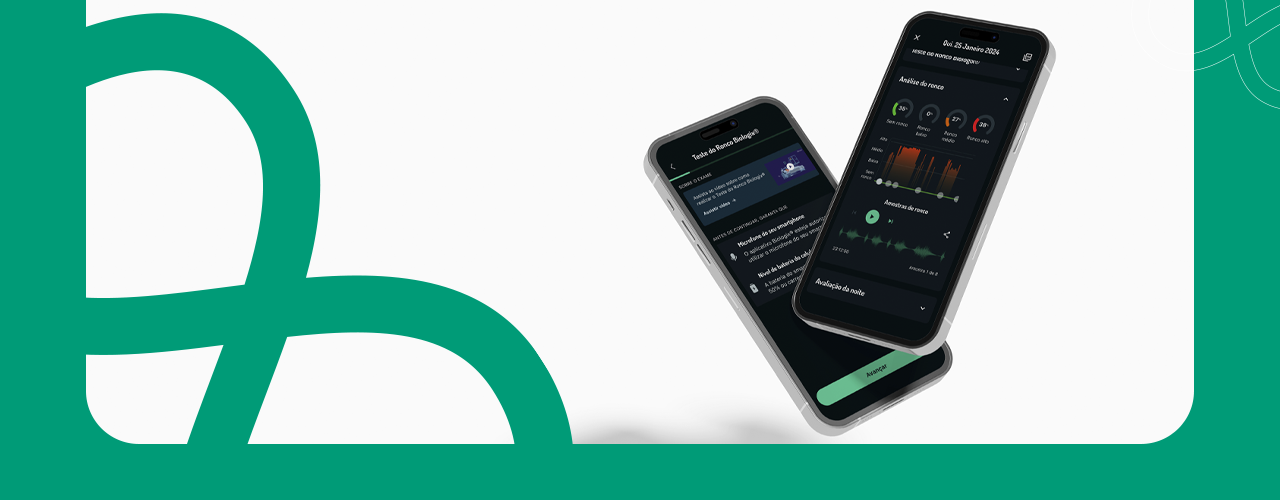
The Biologix solution represents a significant advancement in detecting snore intensity. With the aid of artificial intelligence, the Biologix Snoring Test® identifies snoring with 92% accuracy, ensuring a reliable diagnosis and enabling more efficient treatment for patients.
Discover how this technology works and how it ensures user privacy.
Understanding Snoring
Snoring occurs when breathing is compromised during sleep. It is produced when the soft tissue of the upper airway vibrates and, in some cases, completely collapses, leading to obstructive sleep apnea (OSA).
There are two types of snoring: primary snoring, without apnea, and secondary snoring, associated with sleeping disorders. It is important to note that not everyone who snores has OSA, and not all patients with OSA snore.
Primary snoring is quite common, with a prevalence of 35%–45% in men and 15%–28% in women. Age also plays a role; approximately 50% of adults over 60 years old snore.
Other risk factors include obesity, smoking, excessive alcohol consumption, genetic predisposition, and, most notably, obstructive sleep apnea.
The Importance of Precise Diagnosis
A reliable diagnosis makes it possible to identify the cause of snoring and define the most appropriate treatment. For example, obstructive sleep apneacan be treated with CPAP therapy, dental devices, or surgery.
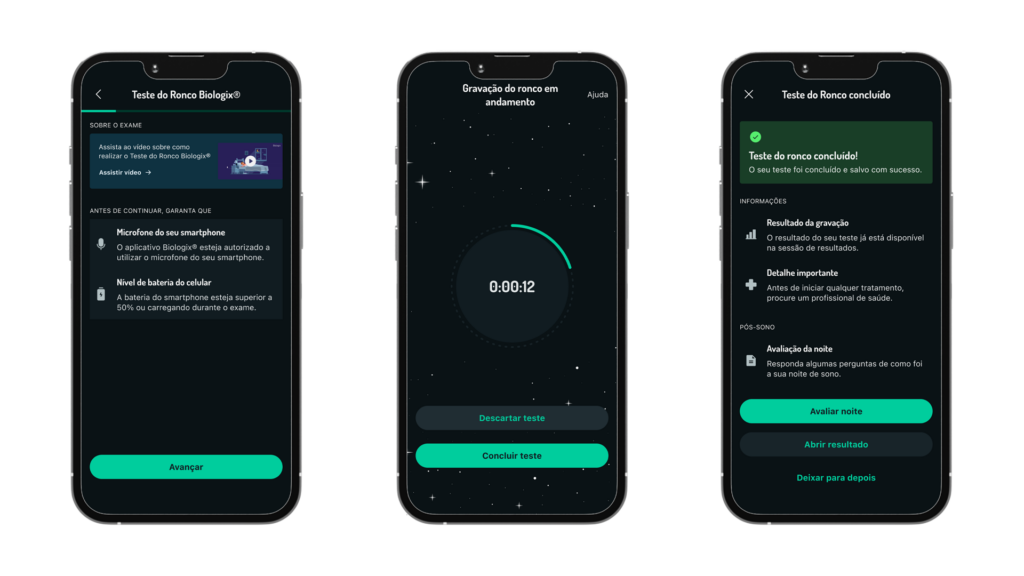
Evaluating sleep not only reveals the patient’s condition but also guides effective treatment. In this regard, the Biologix Snoring Test® stands out as an innovative and accessible tool, since patients can record their snoring at home using only a smartphone.
Integrated into the Biologix app, the test records and classifies snoring, providing detailed information on intensity and duration. Thanks to machine learning, the algorithm can differentiate snoring from other sounds with an impressive 92% accuracy.
The Differential of the Biologix Snoring Test®
Nowadays, snoring plays an important role in sleep apnea, which is why it became part of the Biologix solution in 2019.
Development of the snoring detection algorithm began in 2017, motivated by the limitations of existing solutions at the time, such as mistaking snoring for unrelated noises (e.g., CPAP machines, traffic, or banging doors).
Most technologies identified snoring by setting a sound intensity threshold, classifying any sound above that level as snoring. This method led to frequent errors.
To improve accuracy, Biologix developed an algorithm that isolates each audio segment and analyzes individual characteristics such as duration, amplitude, waveform, fundamental frequency, harmonic content, and frequency spectrum.
In short, the Biologix Snoring Test® uses artificial intelligence to analyze nighttime sounds and determine whether a patient has respiratory issues during sleep. The system converts sounds into numerical data, identifies unique features, and, based on prior training, classifies each event as snoring or not.
This process enables the algorithm to identify snoring accurately, collect evidence, and support healthcare practitioners in diagnosing and treating sleep disorders.
How Does the Biologix Snoring Test® Work?
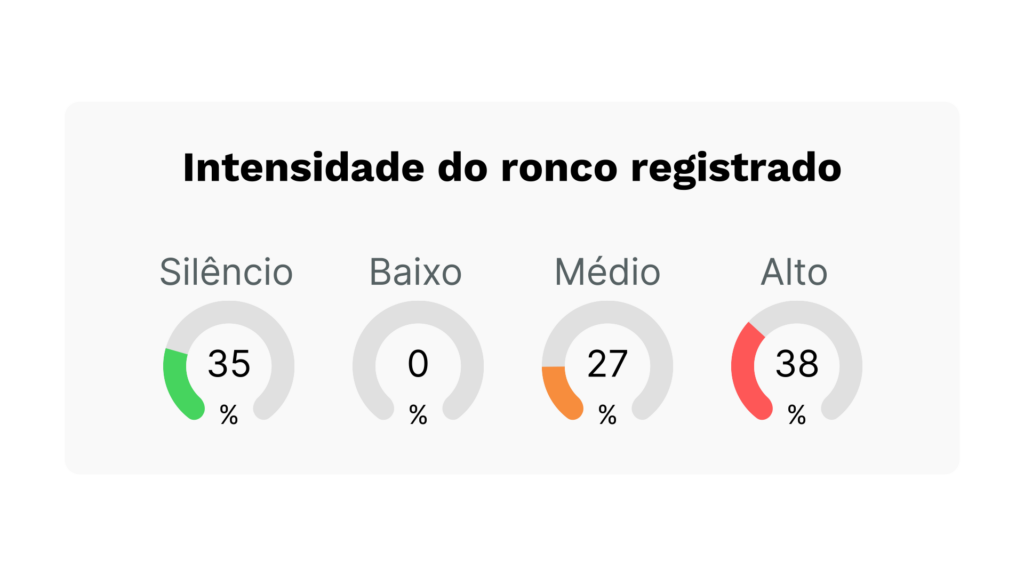
Through artificial neural networks and machine learning, the algorithm analyzes sounds captured by the smartphone’s microphone and differentiates snoring from other noises. Results are displayed clearly and objectively, including both snoring intensity and total duration at each level.
Operation stages:
- Audio Recording (Data Input): The Biologix app records nighttime sounds, including snoring. This phase captures raw data.
- Transforming Sounds Into Numbers (Numerical Representation): In this phase, the recorded sounds are converted into numerical sequences. This is necessary because the algorithm does not process sounds directly; therefore, the data must be transformed into a language it can interpret, numbers. In this way, each recording acquires numerical values that represent properties such as volume and frequency.
- Identifying Snoring Characteristics (Feature Extraction): After the audio is transformed into numerical sequences, the algorithm analyzes specific sound attributes expressed as numbers, such as volume (high or low), frequency (low or high), and duration. These parameters act as the fingerprints of snoring, they are unique to each person and enable precise characterization so the algorithm can process them with greater accuracy.
- Recognizing Snoring (Learning): Before analyzing a patient’s snoring, the algorithm is trained with numerous examples, assigning different weights to each characteristic. In this way, it learns to distinguish snoring from other sounds, such as grunts or environmental noises.
- Sound Classification (Output): Based on the identified characteristics and acquired knowledge, the algorithm determines whether a sound corresponds to snoring or not.
Advantages of the Biologix Snoring Test®
- Accessibility: Available in the Biologix app, free of charge. Performing the test requires prior authorization from an accredited center.
- Ease of Use: Patients can perform the test in their own home.
- Accuracy: Machine learning technology ensures high precision in snore detection.
- Speed: Results are generated automatically after completing the test.
- Privacy: Only the physician and the patient have access to the data, ensuring personal information remains protected.
How to Boost Biologix Snoring Test® Results
To maximize the efficiency of the algorithm, follow these recommendations during the test:
- Place the phone close enoughto capture sounds clearly, without covering the microphone.
- Sleep alone on the night of the testso the microphone records only your sounds.
- Turn off noisy devicessuch as fans or air conditioners to prevent interference.
Reminder: Snoring may be a sign of serious health conditions. Identifying and evaluating it is the first step toward proper diagnosis and treatment. The Biologix Snoring Test® is an essential tool in this process.