

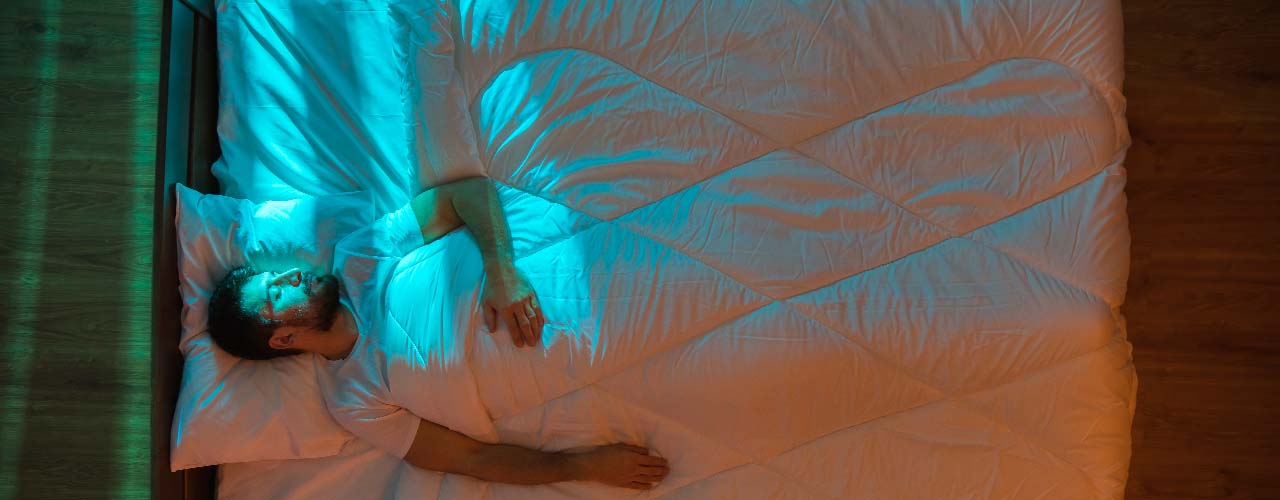
Está cada vez mais comum casais dormirem separados, de acordo com a 5th Annual Sleep Survey Report publicada no relatório “Wake Up Call: Global Sleep Satisfaction Trends”, realizada pela Royal Philips e divulgada em março de 2020. Segundo a pesquisa, 36% das pessoas entrevistadas afirmam que dormem separadas de seu parceiro para tentar melhorar a qualidade do sono.
The same survey shows that 60% of Brazilians are dissatisfied with their sleep. Impaired sleep quality is independent from couple’s sexual orientation: both hetero- and homosexuals face sleep problems.
We know that poor-sleep nights affect our mood and we tend to be more irritable and nervous. Thus, couples end up having rows and arguments, which influence relationships negatively.
Over 13 thousand people were interviewed in 13 countries for this survey in order to gather information and gain insight into sleep-related behaviors, perceptions, and attitudes. This year’s results show that respondents’ satisfaction with their sleep quality remains low. Moreover, worries and stress, relationship problems, and cell phone use are the main sleep inhibitors. Throughout the world, people recognize the importance of sleep for their overall health, the mental and physical benefits from it, as well as the consequences of inadequate sleep.
Este ano, os entrevistados relatam taxas mais baixas de insônia, ronco, distúrbio do trabalho por turnos e dor crônica, mas apneia do sono permanece consistente (2019: 10% vs. 2020: 9%). Dos que relataram ter apneia do sono, 51% disseram que o distúrbio está afetando seus relacionamentos.
A considerable proportion of the respondents (30%) are not aware of sleep apnea treatments, not even those who know they have this disorder. This is why it is important to diagnose and monitor patients to make sure they are getting the right treatment. Only 6% of Brazilians who have apnea are currently on a treatment -CPAP/ BiPAP therapy, among others- aimed at improving their sleep. People are aware they need help, since 60% of them are interested in new information or strategies that could improve their sleep.
Além da avaliação clínica, uma polissonografia (exame do sono) pode ser indicada. Para tanto, durante a consulta ele deve fazer perguntas sobre a rotina e detalhes referentes ao ambiente familiar relacionados ao sono.
O Exame do Sono Biologix é uma polissonografia multimodal, com canais de saturação de O2, frequência cardíaca, actimetria e ronco (usando o microfone do celular) um exame para ser realizado em casa, simples e fácil de usar. Usado por profissionais da saúde para diagnóstico e tratamento da apneia do sono. Na hora de dormir, basta colocar o sensor no dedo e iniciar o exame no App Biologix. Ao acordar basta clicar em concluir exame para receber o resultado imediatamente.
Anyhow, it is clear that sleeping separately indeed is a solution implemented in specific circumstances, such as when a bed partner snores. In these cases, you should see a sleep physician. In addition, it is crucial for the couple to discuss this matter, since dialogue is important for a healthy relationship and, as a consequence, for both its members’ health.
DISCLAIMER: Only properly qualified physicians can diagnose diseases, recommend treatments, and prescribe medications. The information provided herein is for educational purposes only.