



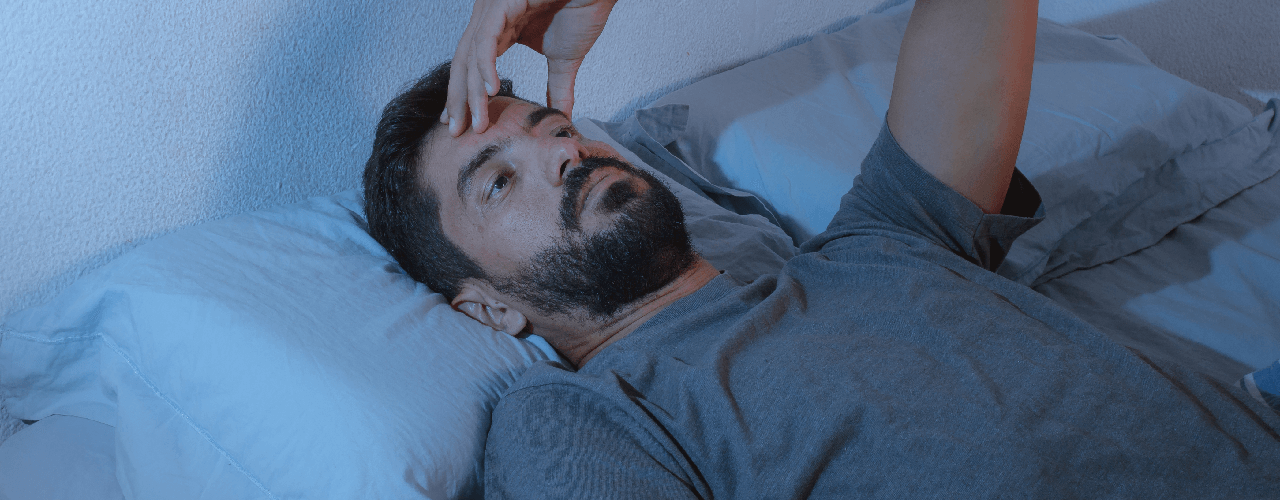
Let's talk about difficulty falling asleep. Do you or someone close to you have trouble sleeping? Did you know that there are illnesses related to this difficulty? Sleeping well is a privilege not everyone enjoys. Lack of time, excessive worries, family and work responsibilities, illnesses, and other factors can prevent a person from falling asleep or staying asleep through the night.
Difficulty sleeping is characterized by trouble initiating or maintaining sleep, as well as a feeling of non-restorative rest, for at least one month. This condition causes significant impairment in daily life. It can also be a symptom or consequence of another illness or, more frequently, a sleep disorder.
To better understand this, let’s look at how sleep works. Sleep is divided into four stages, each with a specific function. These stages repeat in cycles lasting 70 to 110 minutes, between four and five times per night. Disrupting any of these stages can lead to both short- and long-term consequences.
Most Common Sleep Disorders
- Insomnia: Insomnia refers to difficulty falling asleep, staying asleep during the night, or preventing early awakening. It can be transient (comes and goes), short-term (lasting up to three weeks), or chronic (persisting for a longer period).
It may occur alone or be associated with conditions such as depression, hormonal imbalances, or neurological disorders. Furthermore, it can also be triggered by the consumption of caffeine, alcohol, drugs, tobacco, diuretics, or antidepressants. Treatment begins with consulting a doctor, who can identify the underlying causes and recommend appropriate measures. Sleep hygiene, that is, adopting habits that promote rest, is essential. In some cases, medication may be prescribed, but self-medication should always be avoided.
- Sleep Apnea: Obstructive sleep apnea (OSA) s characterized by the obstruction of the upper airway during sleep, often accompanied by a drop in blood oxygen saturation and brief awakenings to breathe.
This disorder causes sleep disturbances that prevent patients from going into deeper sleep phases, which is an obstacle to adequate resting. Therefore, sleep apnea patients’ usually suffer from daytime sleepiness, experiencing complications such as headaches, loss of concentration, irritability, memory disturbances, and high blood pressure.
Diagnosis and severity assessment are performed using polysomnography , which can be carried out in a sleep laboratory or at home. In standard polysomnography (Type I), the patient sleeps in a lab connected to sensors that record airflow through the airways, blood oxygen levels, heart rate, and chest and body movements; in some cases, neurological channels are also included. There are now simpler and more affordable options, such as the Biologix Sleep Test® . This test, a multimodal polysomnography, is performed only with an oximeter (Oxistar sensor) connected to the Biologix app. This solution allows the study of one or several nights of sleep and enables a diagnosis in a practical, quick, and effective way.
Monitoring can be repeated as often as needed during treatment, allowing healthcare practitioners to make precise adjustments to therapy.
Sleep apnea severity is classified into three levels by the apnea-hypopnea index (AHI), the number of breathing pauses per hour:
- Mild: AHI ≥ 5 and ≤ 15
- Moderate: AHI > 15 and ≤ 30
- Severe: AHI > 30
On the one hand, in mild and moderate cases, dentists may prescribe oral appliances that move the jaw, tongue base, and pharyngeal tissues forward, increasing the size of the upper airway to improve breathing. On the other hand, in severe cases, CPAP (continuous positive airway pressure) is recommended, along with lifestyle changes such as weight loss and quitting smoking. Moreover, in certain cases, surgery may be performed to correct obstructions caused by deformities or to place implants.
- Restless Legs Syndrome: This syndrome is characterized by an intense and irresistible urge to move the legs, often accompanied by involuntary movements. The discomfort or urge to move appears or worsens during periods of rest or inactivity, whether sitting or lying down. Symptoms generally intensify at night, making it difficult or impossible to fall asleep. As a result, the person may feel sleepy, tired, lacking energy, and irritable during the day.
Main symptoms include:
- Discomfort and an urgent need to move the legs
- Pain
- Tingling
- Shivering
- Stabbing sensations
The exact cause is not fully understood. However, in addition to genetic predisposition, dopamine and iron deficiency in the motor areas of the brain are linked to the repetitive, involuntary movements characteristic of the condition. In women, risk factors include being over 50 years old, pregnancy, iron deficiency, excessive alcohol or caffeine intake, and other sleep disorders such as narcolepsy or REM sleep behavior disorder.
Diagnosis is clinical, based on symptom description. In some cases, additional tests are requested, such as polysomnography and ferritin or transferrin tests, to evaluate iron transport in the blood.
In mild cases, treatment may include benzodiazepines (drugs with an anxiolytic effect). In severe cases, medications that stimulate dopamine receptors in the brain without increasing dopamine blood levels are prescribed.
- Narcolepsy: Narcolepsy is a disorder characterized by sudden, uncontrollable episodes of sleep that can occur at any time, while standing on public transportation, during a medical consultation, while driving, or even when operating machinery.
These episodes can cause accidents and disrupt patients’ social and professional lives.
Symptoms include excessive daytime drowsiness, and sudden, uncontrollable loss of muscle tone (cataplexy), sometimes so severe that the person collapses. It can be triggered by intense emotions, usually positive, such as laughter, but also by fear or anger. Other symptoms include fragmented nighttime sleep, frequent awakenings, excessive movement, and non-restorative sleep.
Narcolepsy is a chronic condition with no cure, but it is treatable. Its main symptom (excessive daytime drowsiness) can be managed with medication and lifestyle changes.
Although the exact cause is unknown, many experts believe genetic factors may play a role. One widely accepted hypothesis suggests that narcolepsy originates from the premature death of a group of cells in the hypothalamus, which stops the production of hypocretin, a neurotransmitter that regulates emotions, wakefulness, and appetite. This imbalance may trigger REM sleep at inappropriate times.
Treatment focuses on symptom control. This includes medications that stimulate brain activity to promote wakefulness.
Additionally, adopting healthy lifestyle habits can improve quality of life. Recommendations include following a balanced, light diet; avoiding heavy meals; scheduling naps after meals; and refraining from alcohol or other substances that increase drowsiness.
DISCLAIMER: Only properly qualified physicians can diagnose diseases,
recommend treatments, and prescribe medications. The information provided herein is for educational purposes only.