


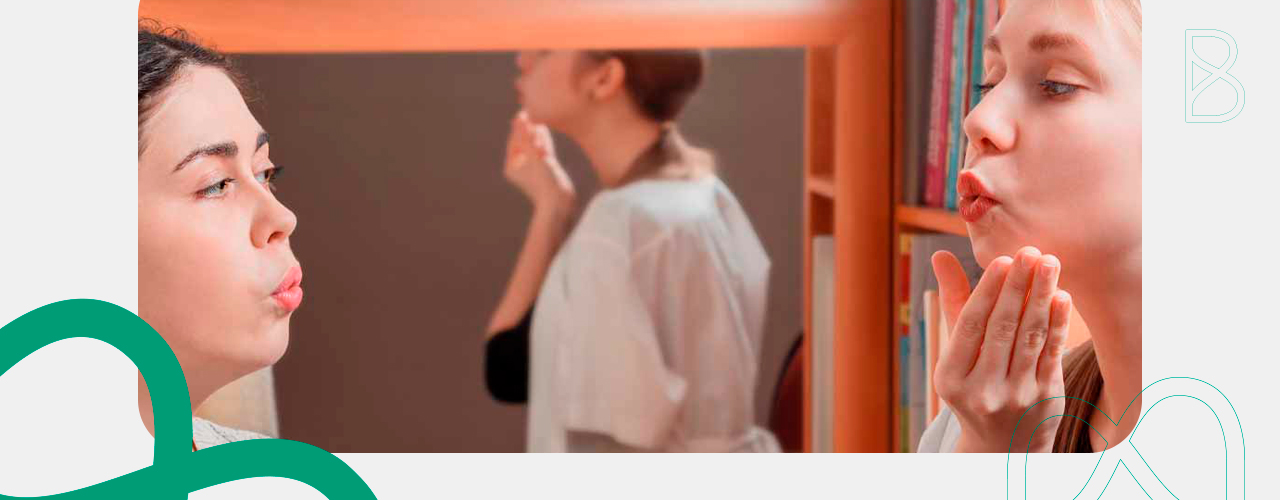
Speech therapy and sleep are more closely related than many expect. Since the late 1990s and early 2000s, healthcare practitioners in the orofacial motor field had already observed the relationship between structural alterations in the stomatognathic system and snoring or obstructive sleep apnea (OSA). Early studies described features such as increased tongue volume (both lateral and longitudinal), greater height of the tongue dorsum with dental impressions along its borders, an elongated, hyperemic, and edematous soft palate and uvula, as well as functional alterations in chewing and swallowing. However, it was not until 2009, with the publication of the article “Effects of Oropharyngeal Exercises in Patients with Moderate Obstructive Sleep Apnea” in the American Journal of Respiratory and Critical Care Medicine, that speech therapy was established as a therapeutic option for obstructive sleep apnea patients.
This study, conducted at the Heart Institute (InCor) of the University of São Paulo, presented the first scientific evidence on the effectiveness of speech therapy exercises in moderate OSA. Results showed a 40% reduction in AHI, a significant increase in peripheral nighttime oxygen saturation, a decrease in cervical circumference, and improvements in daytime drowsiness (Epworth Sleepiness Scale), snoring (Berlin Questionnaire), and sleep quality (Pittsburgh Sleep Quality Index).
Since then, multiple studies have confirmed the benefits of myofunctional therapy. Today, it is known that these programs can reduce snoring frequency by up to 36% and snoring intensity by up to 59%, while also decreasing the arousal index, strengthening the tongue, reducing fat tissue, and improving CPAP adherence by 30% to 65%..
There is also evidence from individual cases. For example, two patients with severe OSA underwent myofunctional therapy: one achieved a normalized AHI, and the other improved from severe to mild OSA, even after gaining weight during treatment. Although isolated, these cases highlight two important aspects: first, the potential of individualized treatment to achieve results beyond those reported in the literature; and second, the ability of myofunctional therapy to provide benefits even when patients gain weight.
Other studies have shown significant improvements in peripheral nighttime oxygen saturation, although not all patients with severe OSA experience the same results. Larger studies are still needed to confirm these benefits.
The good news is that sleep-focused speech therapy is expanding. Beyond the orofacial motor field, other specialties are also investigating how obstructive sleep apnea affects related areas. At recent symposia on speech-language pathology and sleep, studies were presented showing that patients with OSA may also experience vocal and swallowing disorders, worsening of stuttering, impairments in central auditory processing, and delayed language development in older adults. These findings broaden our understanding of OSA’s consequences.
Despite solid scientific evidence, clinical practice is often broader than research. Not all patients fit the profile of study populations. For example, I frequently see middle-aged or elderly patients who have used CPAP successfully for years but later developed adaptation difficulties. They describe feeling like they had to “fight” the device and wanted to stop using it. Evaluation often reveals muscle weakness related not only to aging but also to functional alterations in chewing and swallowing, which interfere with oral cavity closure during sleep. This causes air leaks, dry mouth, awakenings, and daytime drowsiness. In such cases, speech therapy focuses on addressing these difficulties and strengthening muscles to improve CPAP adaptation, the gold standard treatment.
We also see patients who cannot tolerate CPAP or oral appliances , or who refuse surgery. For them, speech therapy can be an excellent alternative, leading to improvements in AHI, OSA severity, nighttime oxygen saturation, fewer awakenings, and fewer apnea events. In other cases, patients who underwent surgery or used oral appliances achieved even better results when speech therapy was added, sometimes resolving residual apnea.
Before concluding, it is important to highlight a lesser-known role of speech therapists specializing in sleep: identifying potential OSA patients. During evaluation, we often detect a “snoring profile” in individuals who come to us for unrelated reasons, such as temporomandibular joint dysfunction, dysphonia, or dysphagia. In these cases, we refer the patient to the appropriate physician for a sleep study, leading to an OSA diagnosis. This is valuable considering the high prevalence and underdiagnosis of OSA. Since I began working in sleep medicine, I have helped identify OSA in 100% of elderly patients or those with severe dysphagia, even when they had no sleep-related complaints. Some already exhibited daytime drowsiness, cognitive decline, or hypertension.
In conclusion, it is essential to remember that OSA is multifactorial. Many patients present with multiple risk factors, and therapeutic success often requires a combination of treatments tailored to each case. When myofunctional disorders are present, the role of the speech therapist is key to achieving effective treatment outcomes.
By Dr. Leticia Freixo – Speech Therapist
Master’s in Science - Bauru's Dental School, – University of São Paulo (FOB -- USP)
LabSono Partner HUGG/UNIRIO
Member of the Brazilian Sleep Association (ABS, in Portuguese).
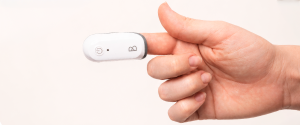
Biologix offers an online platform that allows healthcare practitioners to provide their patients with a simplified and low-cost exam for sleep apnea. The Biologix solution is based on portable sensors, apps, and cloud computing.
The diagnosis of obstructive sleep apnea is extremely important. It can be carried out through polysomnography or the Biologix® Sleep Test a multimodal polysomnography. This test can be performed at home, is simple, practical, effective, and does not require spending the night at a sleep lab.
Learn more about the Biologix solution here!
[lcg ebookimage=’https://www.biologix.com.br/wp-content/uploads/2020/08/b2b3_fono.jpg’ ebookurl=’https://www.biologix.com.br/wp-content/uploads/2020/08/ebook_fonoaudiologia-ronco-e-apneia-obstrutiva-do-sono.pdf’]